PCOS Foundation
Everything About PCOS You Deserved to Know From Day One
By
The HealthyHer Team

You Were Not Imagining It
Before anything else, we want to say this clearly: you were not imagining it.
The cycle that came when it felt like it. The acne that kept coming back in the same spot no matter what you put on your face. The exhaustion that hit even on days when you did nothing. The mood that shifted for reasons you couldn't explain to anyone — not even yourself.
You were not being dramatic. You were not weak. You were not someone who just needed to stress less, sleep more, or eat better.
Your body was trying to tell you something. And for a long time, nobody gave you the language to understand what it was saying.
So What Actually Is PCOS?
PCOS stands for Polycystic Ovary Syndrome — though the name is a little misleading. You don't need to have cysts to have PCOS. What it really describes is a hormonal condition that affects how your ovaries work, how your body manages insulin, and how your hormones communicate with each other.
It is one of the most common hormonal conditions in the Philippines. An estimated 1 in 10 Filipinas of reproductive age has it — which means in any group of ten women you know, at least one is likely navigating the same thing you are.
And yet most of them are figuring it out alone.
PCOS is not a disease. It is not a life sentence. It is a hormonal condition — which means it can be understood, managed, and supported when you have the right information.
— — —
What It Can Look Like — And Why It's Different for Every Woman
PCOS does not look the same for every woman. And this is one of the most important things to know — because it means you don't need to fit a specific picture to have your symptoms taken seriously.
For some Filipinas, PCOS shows up as an irregular cycle. For others, it is the skin — that persistent hormonal acne along the jawline and chin that no skincare product ever fully solves. For some it is the fatigue that sits in the body even after a full night of sleep. For others it is the mood — shifts that feel disproportionate, anxiety that comes out of nowhere, days when everything feels heavier than it should.
For many women, it is all of these things at once. Scattered and seemingly unrelated. Easy to dismiss. Easy for others to dismiss too.
If you have been told 'it's just stress' or 'everyone's cycle is a little irregular' — you are not alone. Your symptoms were real. They were connected. And they had a name all along.

What You Can Do Starting Today
Understanding your PCOS is the first step. Here is where to begin.
Track your cycle.
Even just noting how you feel each day in your phone gives you data. Over time you will start to see your own pattern — and patterns give you power. You stop being blindsided. You start planning around what your body needs.
Move your body gently and consistently.
You do not need intense workouts. A 20-minute walk, yoga, stretching. Gentle consistent movement supports how your body regulates blood sugar and reduces the inflammation that can quietly disrupt your hormones.
Eat protein with every meal.
This is one of the simplest things you can do to support blood sugar stability, which directly impacts your hormone levels. Eggs, chicken, fish, tofu, beans — protein at every meal.
Support your hormones daily.
Lifestyle habits are the foundation. But many women with PCOS find that daily nutritional support helps fill the gaps that lifestyle alone cannot always cover.
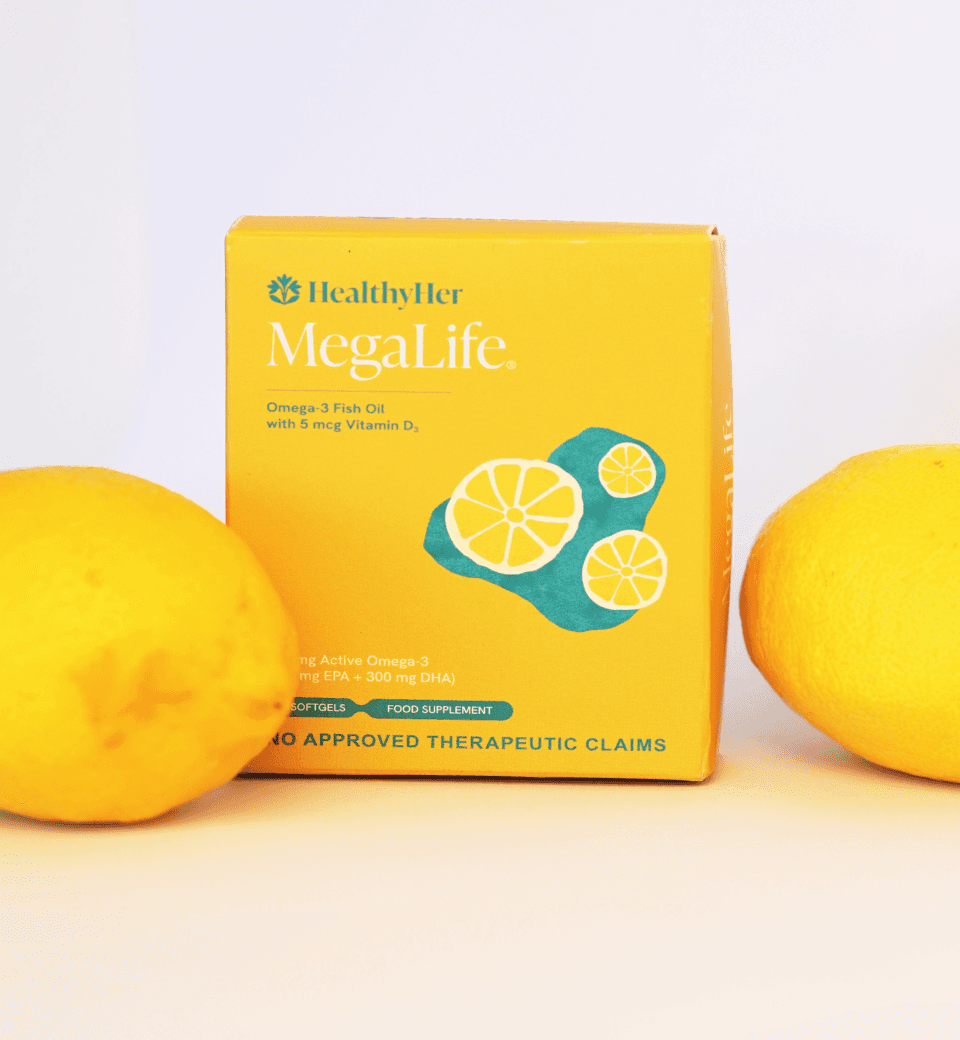
MegaLife Omega-3 Fish Oil — 900mg Omega-3 and Vitamin D3 in one softgel — supports cycle regularity, helps reduce hormonal inflammation, and addresses the Vitamin D deficiency that most Filipinas have without knowing it. One softgel a day, after a meal.
HelloCalm Spearmint Tea works on the androgen-driven side of PCOS — the hormonal acne, the stress-driven hormone spikes, the symptoms that show up when cortisol is high. Spearmint and Rhodiola Rosea, naturally sweetened with stevia. One cup a day.
Two products. Two different angles of the same hormonal imbalance.
You Are Not Behind
If you are just learning all of this now — whether you were diagnosed yesterday or ten years ago — you are not behind. You are exactly where you are supposed to be.
PCOS is complicated. The information about it is scattered, often clinical, and rarely written for the woman who just wants to understand her own body in plain language. It is not your fault that it took this long.
You were never dramatic. You were never too sensitive. You were a woman living with a hormonal condition that nobody properly explained.
That changes now.
Want to keep learning about PCOS?
Here are articles we recommend reading to learn more about it.